Does the Sodium Potassium Pump Use Bulk Transport
The structure of the cell membrane is designed so that it does not allow free movement of substances. Sodium-Potassium Pump Discusses an example of active transport in which membrane protein moves sodium and potassium ions against large concentration gradients.
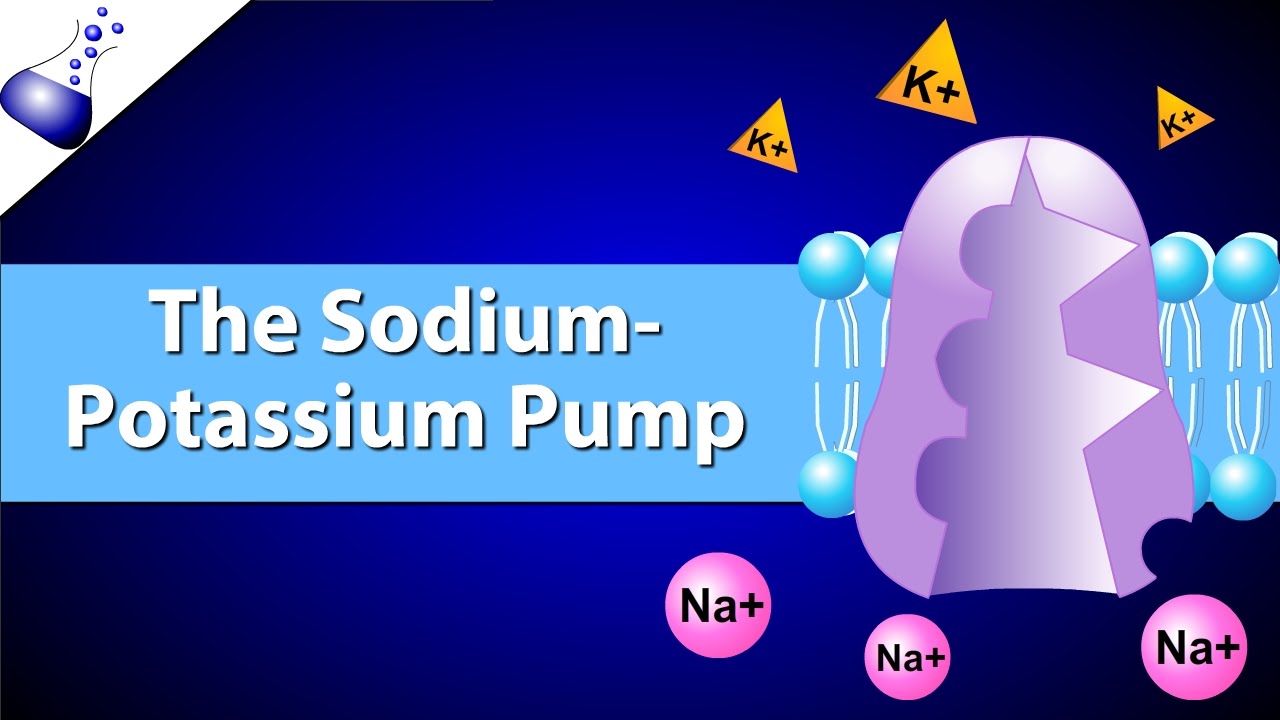
The Sodium Potassium Pump Youtube
Does the sodium potassium pump use bulk transport to move sodium and potassium ions.
. Sodium-potassium pump - moves sodium and potassium ions across the membrane 3 sodium ions bind to protein on the cytoplasm side causing the protein to change shape. Activation gates are closed and inactivation gates are open. Based on the mechanism of movement the transport.
Examples of active transport include the Sodium-Potassium Pump primary transport the Naglucose symporter secondary transport and endocytosis and exocytosis bulk transport. The sodium-potassium pump is an example of active transport because energy is required to move the sodium and potassium ions against the concentration gradient. The NaK-ATPase enzyme is in a state of activity ie.
3 Na ions bind from the interior of the cell to the carrier protein. How does the sodium-potassium pump contribute to the net negative charge of the interior of the cell. The sodium-potassium pump moves sodium ions out of and potassium ions into the cell.
Sodium potassium pump. No it uses highly specific as opposed to bulk Active Transport Systems times two. What are three.
This pump is powered by ATP. Critical Thinking Questions Where does the cell get energy for active transport processes. At that point two potassium ions from outside the cell bind to the protein pump.
Steps of the Na and K pump. That source is adenosine triphosphate ATP the principal energy-carrying molecule of the cell. A It transports both sodium ions and potassium ions down their respective concentration gradients.
However it is semipermeable due to which certain substances can still move in and out of the cell. In doing so it pumps the three sodium ions out of the cell. At resting membrane potential which of the following statements about the voltage-gated sodium ion Na channels is TRUE.
How does the sodium pump work. It utilizes ATP as energy currency to transport Na and K ions. - a To perform endocytosis - b To move sodium and potassium by facilitated diffusion - c To perform bulk transport through the plasma membrane - d To produce a concentration gradient for sodium ions - Cells and Tissues Multiple Choice Question- MCQtimes.
It is estimated that for every ATP molecule consumed by the pump three sodium ions are exported and two potassium ions are imported. Transport Na and K ions up their concentration gradient. The breakdown of ATP to ADP adenosine diphosphate releases energy.
The potassium ions are then transported into the cell and the process repeats. It concludes that a single positively charged ion is excessively exported in every pump cycle. 2 Sodium channels-Mgi blocks outward currents in a voltage- and dose-dependent manner acts as a fast blocker by screening of surface charges and produces an open channel block in several Na channels.
It uses energy from ATP. The energy used to fuel the sodium-potassium pump comes from the breakdown of ATP to. B It uses energy from ATP to alter the conformation of the carrier protein.
This pump is powered by ATP. Glucose from digested food enters intestinal epithelial cells by active transport. Solved Answer of MCQ What is the purpose of the sodium-potassium pump.
D It moves sodium ions and potassium ions across the membrane in. For every ATP molecule it exports 3 Na ions and imports 2 K ions. C It is an active transport mechanism.
This results in a net positive charge export of a single ion every pump cycle. The sodium-potassium pump carries out a form of active transportthat is its pumping of ions against their gradients requires the addition of energy from an outside source. Is the sodium potassium pump always active.
The sodium-potassium pump exchanges sodium ions for potassium ions and vice versa. Why would intestinal cells use active transport when most body cells use facilitated diffusion. The sodium-potassium pump moves sodium ions out of and potassium ions into the cell.
For each ATP that is broken down 3 sodium ions move out and 2 potassium ions move in. The sodium-potassium pump uses ENERGY to move ions it is a form of active transport. It moves sodium ions generall highly concentrated outside the cell to the outside and potassium ions highly.
Bulk transport phagocytosis and pinocytosis Cell Membrane Transport. A phosphate group from ATP is removed and bound to the carrier protein. Endocytosis - envelops food particles substances required for growth are sometimes too large to cross the bilayer.
The sodium-potassium pump uses bulk transport to move the sodium and potassium ions. The sodium-potassium pump uses active transport to move molecules from a high concentration to a low concentration. The carrier protein changes shape allowing the 3 Na ions to be released to the outside of.
The sodium-potassium pump is found in the plasma membrane of almost every human cell and is common to all cellular life. The sodium-potassium pump uses active transport to move molecules from a high concentration to a low concentration. Which of the following describes the sodium-potassium pump.
The molecule adenosine triphosphate ATP is the main source of energy for cellular processes. ATP is formed by an inorganic phosphate molecule held in high-energy linkage with a molecule of adenosine. For each ATP that is broken down 3 sodium ions move out and 2 potassium.
Sodium potassium pump. One each for each of the. As per the sodium potassium pump definition this is a protein enzyme present in the cell membrane.
Mgo increases Na transport in toad bladder and human amnion at high concentration by acting on the driving force of the sodium pump. The ions are pumped against the concentration gradient meaning that it requires energy active transport.
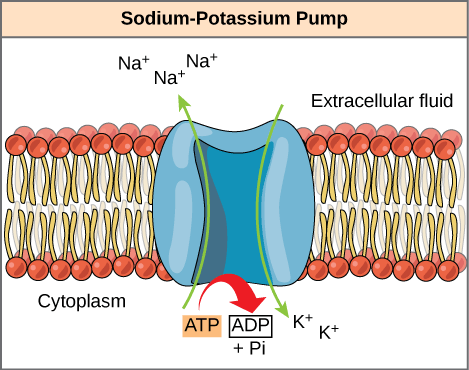
Pumps Active Transport Definition Types Expii

Bio 461 Module 1 2 4 1 2 5 Active Transport And Bulk Transport Flashcards Quizlet
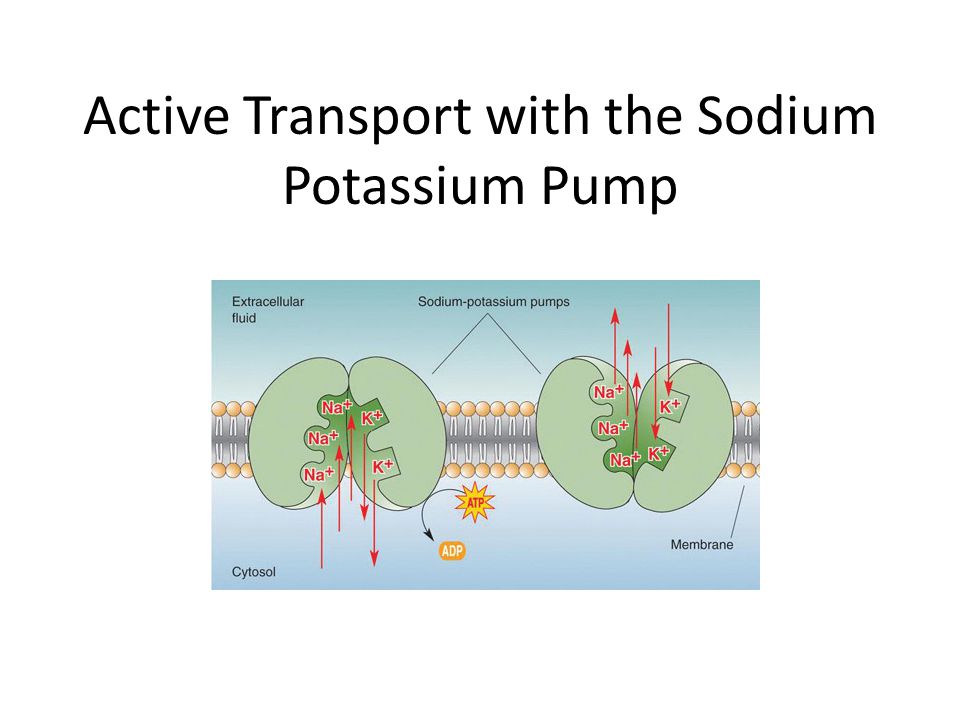
Active Transport With The Sodium Potassium Pump Review Amphipathic Molecules Hydrophobic Region And Hydrophilic Region Example Phospholipids And Ppt Download
No comments for "Does the Sodium Potassium Pump Use Bulk Transport"
Post a Comment